AI-generated images used to sit mostly in the category of creative experimentation. They were interesting for mockups, concept art, campaign ideas, and the occasional novelty post, but not yet reliable enough to change how most businesses thought about risk. That is changing. The conversation is no longer just about whether AI can help a team create visuals faster. It is also about whether those visuals can now look credible enough to create trust, compliance, and governance problems.
That shift matters because businesses do not only use images for marketing. Images show up in sales collateral, product pages, internal documentation, training materials, investor updates, customer support, insurance claims, invoices, screenshots, and social proof. Once synthetic visuals become easy to create and hard to distinguish from real ones, the issue moves from the creative team to operations, finance, procurement, legal, risk, and leadership.
For a while, the limitation of AI-generated images was obvious. Hands looked wrong, text fell apart, details did not hold together, and many outputs still felt uncanny. That created a natural safety buffer. People might be impressed by the image, but they were also likely to question it.
As image generation improves, that buffer gets thinner. Better text rendering, better instruction following, more coherent scenes, and more controllable outputs mean synthetic images are becoming more useful in everyday business contexts. The important point is not that every fake image is now perfect. It is that many of them are now good enough to work as supporting evidence in normal business workflows.
That changes the practical risk. A generated image does not need to fool a forensic analyst. It only needs to pass through a busy approval process, a rushed payment review, a customer complaint workflow, or a team chat without attracting much scrutiny. In that sense, AI-generated images are becoming less of a design novelty and more of a process integrity issue.
Businesses should think about this the same way they think about any other increase in synthetic evidence. If realistic visuals can be generated on demand, then screenshots, product photos, proof-of-work images, incident photos, marketing assets, and even internal diagrams can no longer be treated as inherently trustworthy just because they look polished.
The risk is easiest to understand when broken into ordinary workflows rather than abstract fears about misinformation.
Marketing and brand teams are an obvious starting point. AI image tools can help produce hero banners, blog art, social graphics, event visuals, and mock campaigns faster than traditional design cycles. That is useful, but it also creates new review questions. Is the image implying a real customer, employee, product, or office that does not exist? Does it include recognisable visual details that suggest a real partnership, location, or event? Does it accidentally create a claim the business cannot stand behind?
Sales and proposal teams may use synthetic visuals in pitch decks, solution diagrams, or future-state concepts. Again, that can be productive. But if generated visuals blur the line between conceptual and current capability, they can create misrepresentation risk. A stylised product interface mockup may be harmless when clearly labelled. The same image can become a trust issue if it is interpreted as a real feature or working integration.
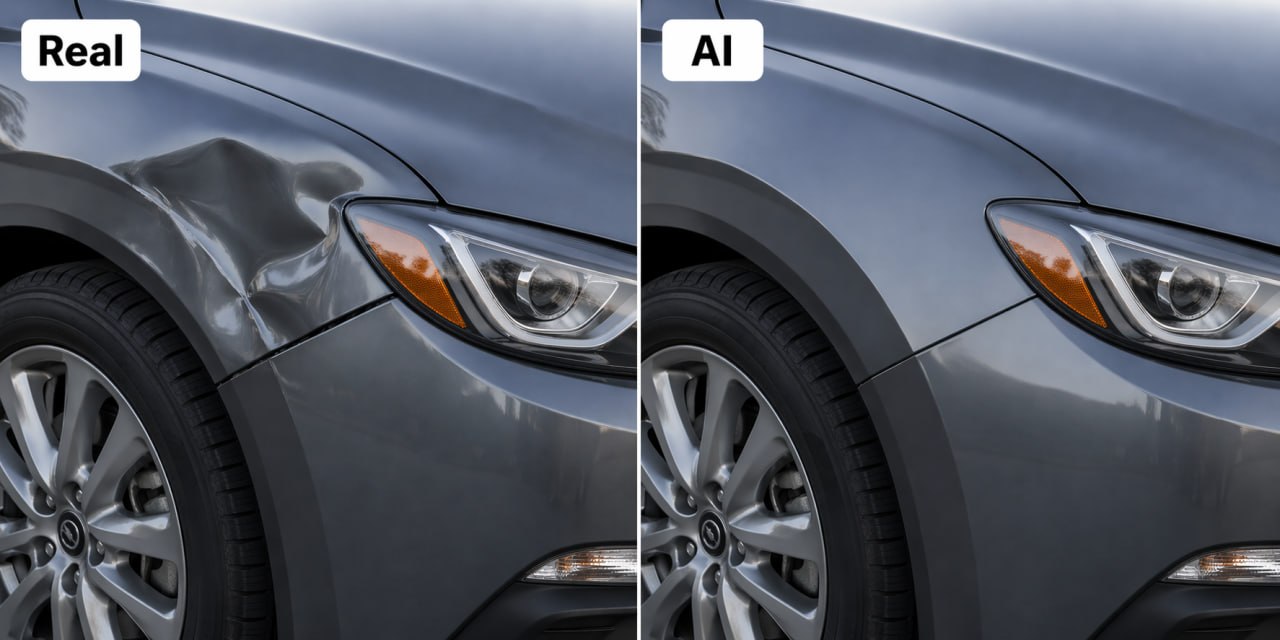
Finance and procurement teams face a different category of problem. If invoice screenshots, proof-of-delivery photos, purchase confirmations, damaged-goods images, or identity-related visuals become easier to fabricate, then visual validation becomes less reliable as a control. The old habit of checking whether something “looks right” becomes weaker as a safeguard.
HR and internal operations are not exempt either. Training material, internal comms, security awareness content, and employee-facing documentation increasingly include screenshots and generated visuals. If teams get used to synthetic imagery without proper labelling or source tracking, they may unintentionally normalise lower standards of verification in contexts where accuracy matters.
Customer support and incident handling may be the most immediate area of concern. Support teams already deal with screenshots, photos, and user-provided visuals as part of troubleshooting, refund requests, or dispute resolution. As generated visuals improve, organisations need clearer rules about what image-based evidence is sufficient on its own and what requires corroboration.
It is tempting to frame AI images as a communications problem. In reality, the bigger question is governance. Once synthetic visuals are part of normal business work, organisations need to decide what is allowed, what must be disclosed, what requires approval, and what needs stronger validation.
That is where compliance enters. Depending on the business, relevant obligations may include misleading and deceptive conduct, advertising standards, privacy, record-keeping, financial controls, sector-specific regulations, and contractual obligations to customers or partners. Even where no explicit AI-image law applies, existing duties often still do.
In Australia, this matters because many compliance obligations are principle-based rather than technology-specific. A business does not get a free pass because a problematic image was generated by a model rather than designed by a person. If a visual misleads customers, misstates capability, supports a weak control process, or creates poor records, the risk sits with the business.
This is also why internal policy cannot stop at “staff should use AI responsibly.” That phrase sounds sensible, but it is not a control. Teams need operational guidance. What counts as acceptable use? Which categories of visuals require disclosure? When are original source files required? Who signs off on public-facing assets? Which workflows can no longer rely on screenshots or photos alone?
One of the harder parts of this shift is that the damage is often indirect. Most businesses will not wake up to a dramatic “AI image crisis.” Instead, they will gradually accumulate weaker assumptions inside day-to-day workflows.
A marketing team starts using AI imagery for speed and discovers that nobody is tracking where images came from. A support team accepts screenshots as proof because they always have. A procurement process allows image-based documentation without secondary verification. A sales deck uses generated interface concepts that are not clearly labelled. None of these decisions seems catastrophic on its own. Together they erode confidence in what evidence means inside the organisation.
That is why the right response is not panic. It is control design. The goal is not to ban useful tools. It is to update trust assumptions to match current technology.
Most organisations do not need a heavyweight AI-image governance program on day one. They do need a practical baseline. A simple framework usually starts with five areas.
1. Classify image use cases. Not every image carries the same risk. Decorative blog art is different from a product screenshot, a proof-of-delivery photo, or a visual used in regulated customer communications. Start by separating low-risk creative use from medium- and high-risk evidentiary or representational use.
2. Define disclosure rules. If an image is synthetic, composited, or materially altered, decide when that must be disclosed internally or externally. This does not need to be dramatic. It just needs to be consistent. In some cases, a quiet internal tag is enough. In others, public labelling matters.
3. Strengthen approval paths. High-impact visuals should not move through the same lightweight review process as routine design assets. Public-facing visuals tied to product claims, customer trust, partnerships, facilities, or performance results should have clear owners and explicit approval checks.
4. Require stronger evidence for sensitive workflows. If a process relies on screenshots, photos, or image attachments for financial, operational, or support decisions, ask what secondary verification should exist. That could mean metadata checks, source system validation, request logging, callback confirmation, or human review against another system of record.
5. Keep a source trail. Teams should be able to answer basic questions about important visuals: where did this come from, who created it, what tool was used, was it edited, and who approved it. That alone solves a surprising number of downstream problems.
For many businesses, those five controls are enough to move from vague concern to a more durable operating model.
Executives and operational leaders do not need to become image forensics experts. They do need to ask better process questions.
Those questions tend to reveal whether the issue is theoretical or already operational.
The deeper lesson is not limited to images. As AI systems improve, more outputs will cross the threshold from “interesting draft” to “usable evidence.” Text, images, audio, screenshots, summaries, and eventually workflow traces all start affecting how organisations make decisions. Each time that threshold moves, trust and governance have to catch up.
That is why businesses should resist the temptation to treat AI adoption as a series of isolated tool choices. The smarter approach is to ask which business assumptions the tool changes. In this case, the changed assumption is simple: an image that looks credible is no longer strong evidence by default.
That is not a reason to avoid the technology. It is a reason to be more deliberate about where and how it is used.
None of this means AI-generated images are a bad idea. Used well, they can reduce creative bottlenecks, help teams test concepts faster, improve communication, and lower content production costs. The opportunity is real. But so is the need for process maturity.
The businesses that handle this well will not be the ones that ban synthetic imagery outright. They will be the ones that distinguish between creative acceleration and evidentiary trust, and build controls accordingly. That is a much more practical standard than either blind enthusiasm or blanket fear.
AI-generated images are becoming good enough to matter in a different way. The useful question is no longer “Can we make something impressive with this?” It is “Which of our workflows become riskier once realistic visuals are cheap, fast, and easy to produce?” The businesses that answer that early will make better use of the technology and avoid a lot of preventable problems.
For businesses working through these questions in a practical way, it helps to treat them as part of a broader AI governance and implementation problem rather than a one-off content issue. That is also why AI consulting increasingly has to cover operating models, internal controls, and decision quality, not just tools and automation.