Most conversations about custom software versus off the shelf software still follow the same pattern. Off the shelf software is cheaper, faster to deploy, and often good enough for broad business needs. Custom software is more flexible, more tailored, and usually more expensive. That comparison still holds, but I think it misses the real shift happening right now.
What is changing is not just the quality of software. It is the cost and speed of creating it. AI is making custom software dramatically more accessible, especially for smaller tools, internal workflows, and niche frustrations that would previously have been ignored or worked around.
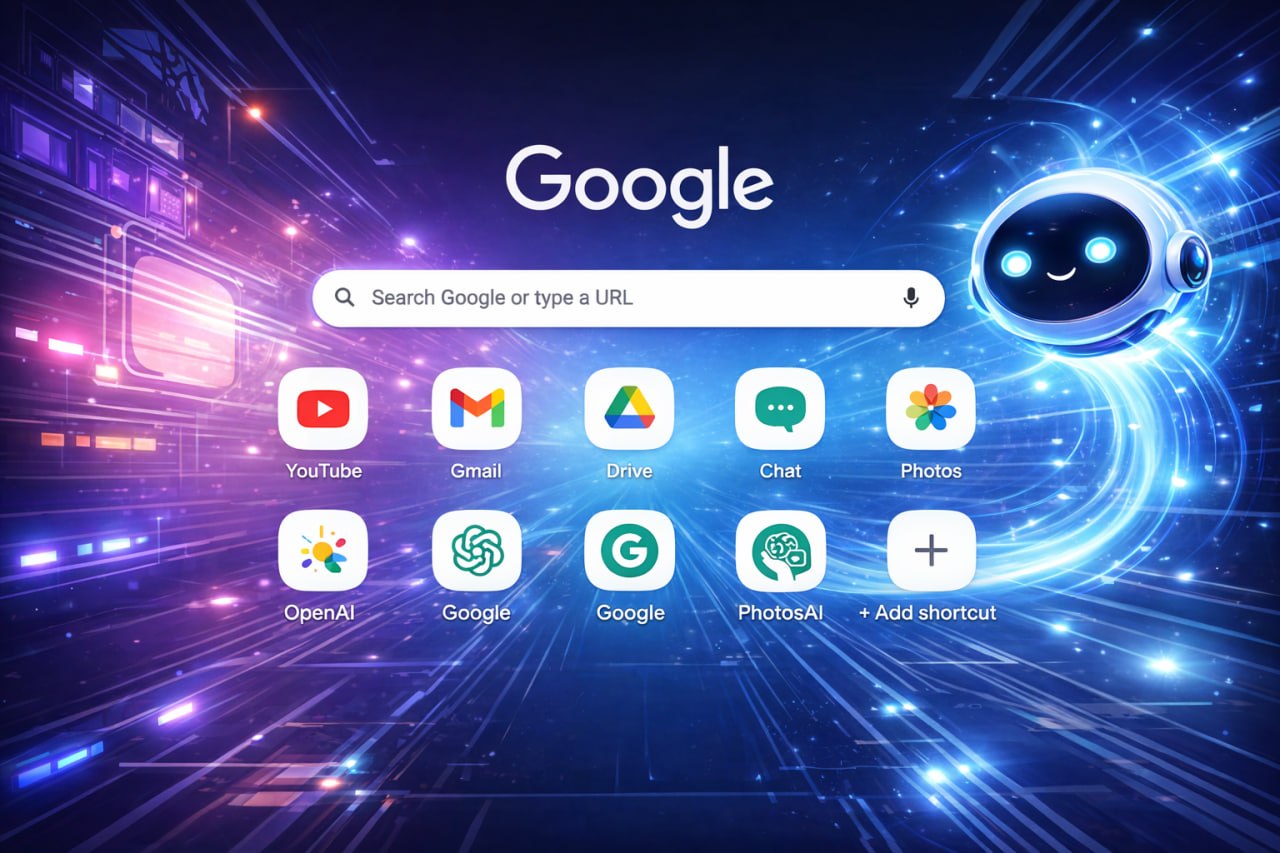
I was reminded of that recently through a very specific annoyance. Chrome’s default new tab page has a cap on shortcuts, and I was sick of working within that limit. It sounds minor, but it kept getting in the way. I wanted more shortcuts, a layout that felt cleaner, keyboard triggers for specific destinations, syncing across Chrome using my own account, prefetching on hover, and a design that felt like it actually belonged to me.
A few years ago, solving that properly would have meant accepting Chrome’s limitation, hunting for a third-party extension that almost did what I wanted, or setting aside a block of time to build something from scratch. This time, I used Claude Code to create a custom Chrome extension that replaced the default new tab experience with my own version.
In about ten minutes, I had a working result. It gave me my own shortcut layout, keyboard triggers such as Shift plus A to open Azure, syncing, URL prefetching, and a better overall interface. More importantly, it solved the problem in the way I wanted it solved, rather than forcing me to adapt to somebody else’s assumptions about what a new tab page should be.
On the surface, this is a small story. It is just a custom browser extension made to fix a minor workflow frustration. But I think it points to something much larger. For a long time, off the shelf software dominated because building custom tools was too costly, too slow, or too complex to justify. People and businesses learned to live with awkward compromises because the software was fixed and changing it was hard.
That is the mentality AI is starting to disrupt. We are moving into a world where software no longer has to be treated as a rigid product chosen from a catalogue. Increasingly, it can be shaped around the actual user, the actual workflow, and the actual annoyance that gets in the way every day.
That does not mean every person will suddenly become a software developer. It does not mean every AI-generated tool will be reliable, scalable, or production ready. But it does mean that many of the small software problems we used to tolerate can now be solved much more quickly than before.
None of this means off the shelf software is disappearing tomorrow. Standard software still makes sense for a lot of common business needs. If a company needs accounting software, email platforms, payroll systems, or mainstream project management tools, buying a proven solution is often the right move. There is no prize for custom-building everything.
The issue is that off the shelf software tends to work best when the problem is broad and common. The more specific the workflow becomes, the more likely the gaps start to show. Businesses end up layering spreadsheets on top of platforms, moving data manually between tools, or asking teams to follow awkward processes just to make generic software fit. Over time, those workarounds become expensive in ways that are easy to underestimate.
That is why the real comparison today is no longer simply custom software is flexible while off the shelf software is cheaper. The more relevant question is whether the cost of compromise still makes sense when customisation is becoming easier to achieve.
AI changes the economics of custom software in an important way. It lowers the friction between identifying a problem and building a first version of a solution. Instead of beginning with a formal discovery process, lengthy scoping exercise, and a full development cycle for every small idea, it is now possible to prototype, test, and refine much faster.
That opens the door to a different kind of software thinking. Rather than asking whether a problem is painful enough to justify a traditional custom build, businesses can start by asking whether a lightweight internal tool, automation, dashboard, browser extension, or custom interface could solve it quickly.
In other words, software becomes more adaptable. It becomes less about fitting into the constraints of a generic product and more about shaping the experience around the way work actually happens.
This is where custom software becomes more than a premium option for large enterprises. It becomes a practical tool for removing friction in places that would once have been left alone. Some of these solutions will be temporary. Some will be internal-only. Some will become the foundation for much larger systems. The important point is that the path from frustration to working software is getting shorter.
If you run a business, manage operations, or lead a team, the shift here is not just technical. It is strategic. The old default was to search for software that was close enough and then adjust the business around it. The new mindset is to ask whether the workflow itself can be better supported through a tailored solution.
That does not always mean replacing every system with something custom. Often it means identifying where the real pain lives. It might be a small but recurring bottleneck. It might be a reporting process people quietly hate. It might be a workflow gap between two existing tools. These are the places where AI-assisted custom software can create outsized value.
That is why I do not think this is the death of off the shelf software in an absolute sense. But I do think it may be the end of accepting one size fits all software as the only sensible default. As AI continues to improve the speed and accessibility of building software, more people will start expecting tools to adapt to them rather than the other way around.
The Chrome extension I built is not a major platform. It is not a unicorn startup idea. It is a small piece of software built to solve a personal frustration. But that is exactly why it matters. It shows how quickly something useful can now be created when the tools are good enough and the intent is clear enough.
Once you experience that shift firsthand, it becomes harder to look at software the same way. You stop seeing limitations as permanent. You stop assuming the answer has to be a third-party app with a subscription and a list of compromises. You start wondering whether the better option is simply to build the thing that fits.
That change in mentality may turn out to be one of the most important software trends of the AI era. Not because every tool will be custom, but because far more tools now can be.
Ready to explore where custom software can remove friction from your business? Get in touch with us to discuss how we can help you build solutions that fit the way your team actually works.